
Hydraulic System Diagnostic Testing in Southwest Virginia
When your equipment breaks down and you don’t know why, every minute it sits idle costs you money. In Southwest Virginia, farms, logging crews, and construction teams can’t afford to wait. We offer hydraulic system diagnostic testing for equipment that’s already down. We go through the whole system until we find what broke.
We work on farm equipment, logging machines, construction fleets, and industrial systems all across the region. We’re your local hydraulic repair service, and we find the problem so it can be fixed without guesswork. Click the call button below and watch your hydraulic problems disappear!
EXCELLENTTrustindex verifies that the original source of the review is Google. I can’t recommend these guys enough! When no one else was willing to help our company, they came to our site the next day and fixed our issue. Super friendly and easy to work with! If we ever have an issue in the future, we will definitely remember Hose Pros!Posted onTrustindex verifies that the original source of the review is Google. Ruben was great to work with, rebuilt all our snow plow hydraulics back to as good as new. Fast service, good communication, great prices!Posted onTrustindex verifies that the original source of the review is Google. Called and set up appointment with Elijah to have lift cylinders repaired on tractor. Showed up on time to remove and rebuild them. Returned them in timely manner and installed cylinders and made sure there were no leaks. Excellent and professional service.Posted onTrustindex verifies that the original source of the review is Google. We dropped a hydraulic distribution block off yesterday afternoon for rebuild was able to pick it up this morning very kind, courteous and professional service. I would give them 10 stars of Google allowedPosted onTrustindex verifies that the original source of the review is Google. Rueben came out right away and fixed the seals on a leaky bucket cylinder on my tractor. He exceeded my expectations in how fast he was able to get me back up and running. His communication was excellent throughout the process. I highly recommend this service.Posted onTrustindex verifies that the original source of the review is Google. Great service, mobility is a huge convenience, professional and knowledgeablePosted onTrustindex verifies that the original source of the review is Google. Had positive experience with hose pros.They fix my Mack granite power steering and pump saved me a lot of money compared to taking it to dealer. They will be my go-to to fix from now on.Posted onTrustindex verifies that the original source of the review is Google. Removed, rebuilt, and installed hydraulic lift cylinder on our older model fork lift with very little down time for us. Very professional, reasonable price, and quick service!Posted onTrustindex verifies that the original source of the review is Google. Fast response, excellent service, very knowledgeable! Would highly recommend!Posted onTrustindex verifies that the original source of the review is Google. Hose Pros was excellent. The service was top tier and they offered to come out the day I called. We settled on the next morning due to it being later in the day. He was extremely professional and was able to quickly take care of my issue. I would highly recommend them for any needs you may have.Verified by TrustindexTrustindex verified badge is the Universal Symbol of Trust. Only the greatest companies can get the verified badge who has a review score above 4.5, based on customer reviews over the past 12 months. Read more
How a Hydraulic System Diagnostic Test Works
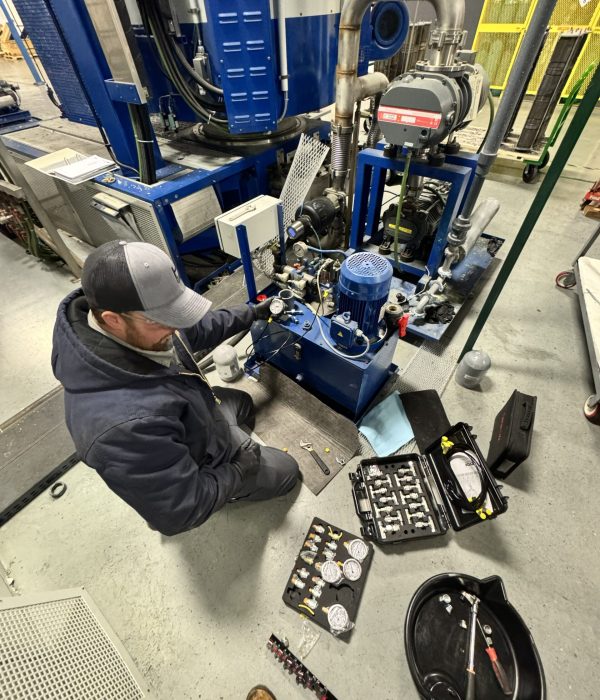
When your equipment stops working and you don’t know why, a hydraulic diagnostic test is how you find the answer. Our technicians go through the whole system — fluid, pump, valves, actuators, hoses, and fittings — until they find what caused the failure. Nothing gets skipped, and nothing gets replaced until we know what’s actually broken.
This matters because hydraulic failures rarely have an easy answer. A slow cylinder could mean a worn pump, a bad valve, a blocked line, or something else entirely. Without a full diagnostic, you could end up replacing parts that aren’t the problem — and still be down after paying for it.
We bring our test equipment straight to your machine in Southwest Virginia. You don’t move the equipment. We come to it, run the tests, and give you a clear answer on what failed and why.
Our Hydraulic Troubleshooting Process
Operator Consultation
Every service call begins by discussing the issue with the equipment operator or owner. Understanding when the problem started, as well as the behavior of the machine, can provide very important details that help us locate the problem. We regularly diagnose systems that are suffering from slow movement, loss of lift power, overheating, unusual noises, or even a complete failure.
Component Isolation
When necessary, specific sections of the hydraulic system are isolated and tested individually. This step allows us to determine whether the problem is originating from a hydraulic pump, a control valve, a hydraulic cylinder, or a motor system. By isolating components, we can pinpoint the exact failure point instead of guessing.
Visual System Inspection
Next we perform a thorough inspection of the hydraulic components. This includes checking hydraulic hoses, fittings, cylinders, pumps and motors, control valves, fluid conditions, filters, and looking for visible leaks or damaged components. Failures can be caused by leaks, contamination, or damaged hoses, which can often be identified during these inspections.
Identification and Repair Plan
Once the issue is identified, we explain the findings clearly and recommend the best repair solution. Whenever possible, repairs can be completed on-site which minimizes your downtime and eliminates the need to transport equipment to a repair shop.
Hydraulic Pressure and Flow Testing
Sometimes problems aren’t immediately visible so if the inspection doesn’t turn anything up, we perform pressure and flow testing using professional diagnostic gauges and tools. These tests help determine if the system is operating within the required specifications and helps reveal things like weak pumps, restricted hydraulic lines, faulty valves, or an internal leakage within the component.
System Testing and Verification
After repairs are completed, the hydraulic system is tested thoroughly to verify that it has proper pressure levels, correct hydraulic flow, smooth operation, and no leaks or performance issues of any kind. This ensures the equipment is operating correctly before returning it to service.
The Most Common Signs Your Hydraulic System Is Failing
When a hydraulic system fails, it usually doesn’t stop all at once. Most of the time, something specific stops working or starts acting differently. That symptom is what tells our technicians where to start looking. If your machine is already down or not working the way it should, these are the most common signs we see on equipment across Southwest Virginia:
- Slow or weak cylinders — the system is losing pressure somewhere
- Unusual noises — whining, knocking, or grinding from the pump or valves
- Fluid loss — visible leaks at hoses, fittings, or seals
- Overheating — the system runs hotter than normal under a regular load
- Erratic movement — actuators that move unevenly or pause when they shouldn’t
Cold winters in the Virginia highlands thicken hydraulic fluid and put stress on seals. Equipment that stops working correctly after hard seasonal use is a common call we get. Whatever symptom brought your machine down, a full diagnostic connects it to the root cause so the right repair gets made.
Why Choose Hose Pros for Hydraulic Diagnostic Testing
Mobile Service
We come to your job site across Southwest Virginia, no trailering required in most cases
Calibrated Test Equipment
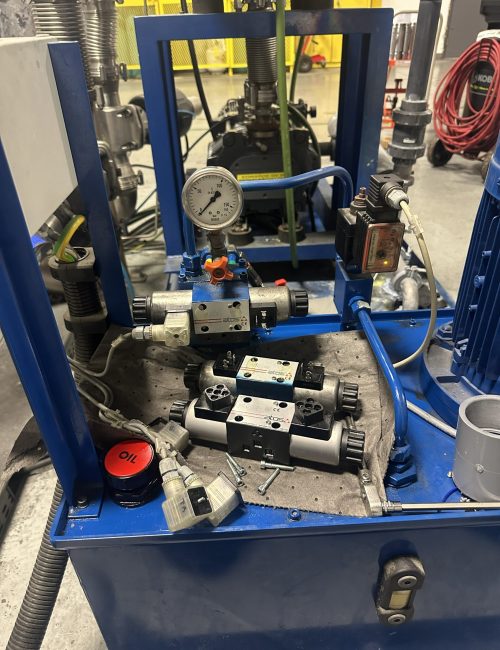
We use proper diagnostic tools and write down every finding
Accurate First Diagnosis
We find the real problem, not just the easiest fix, saving you money on parts you don’t need
Schedule Your Hydraulic Diagnostic Today
If you have a machine down and you can’t determine the problem, just give us a call. Our crew will bring a fully equipped service truck right to the machine and diagnose the problem for you so you get back up and running as fast as possible. Call Hose Pros Today!